Having come to re-encounter one of her childhood works, surprisingly dynamic and complex in its colour composition, the idea of recreating and repainting the piece slowly burgeoned in Nemeth as she felt a wish to experience the world for the first time once more, to go back and sense this prime wonder which we inevitably couple with our first years, while at the same time try to find a new expression for it.
Blending and merging different art forms together in order to generate a completely unique expression, Lui Nemeth, channels through her artworks and creations a freeform, ever-evolving process, which interacts and plays with the notion of structure.
Focused on the act of painting in itself, on paint in its pure physicality, rather than on the finished image; concentrated on the succession of uncertainties and subsequent possibilities within the musical gesture rather than the completed, recorded piece, Nemeth’s vision is that of a world as making, one which finds its purpose in doing rather than being done.
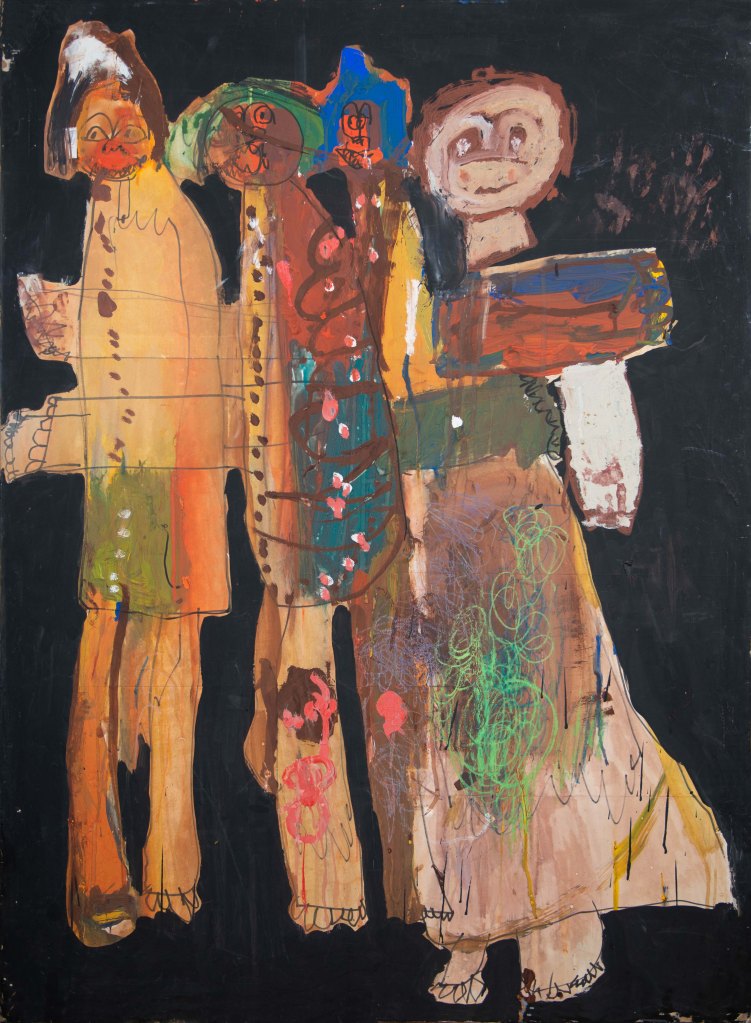
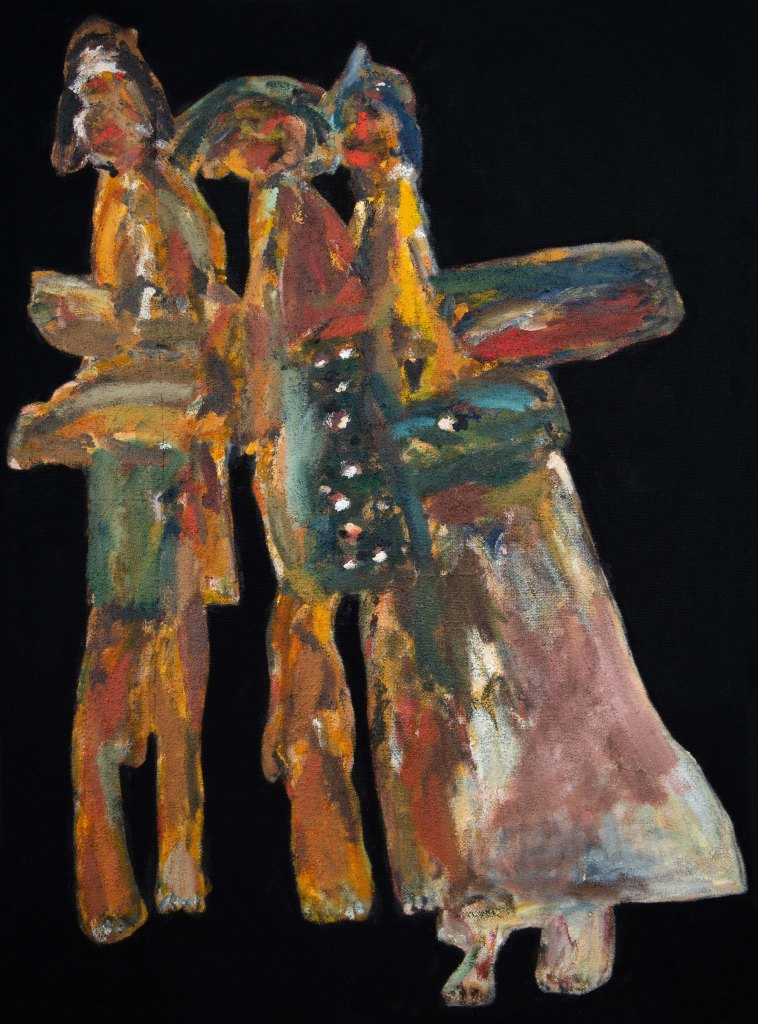
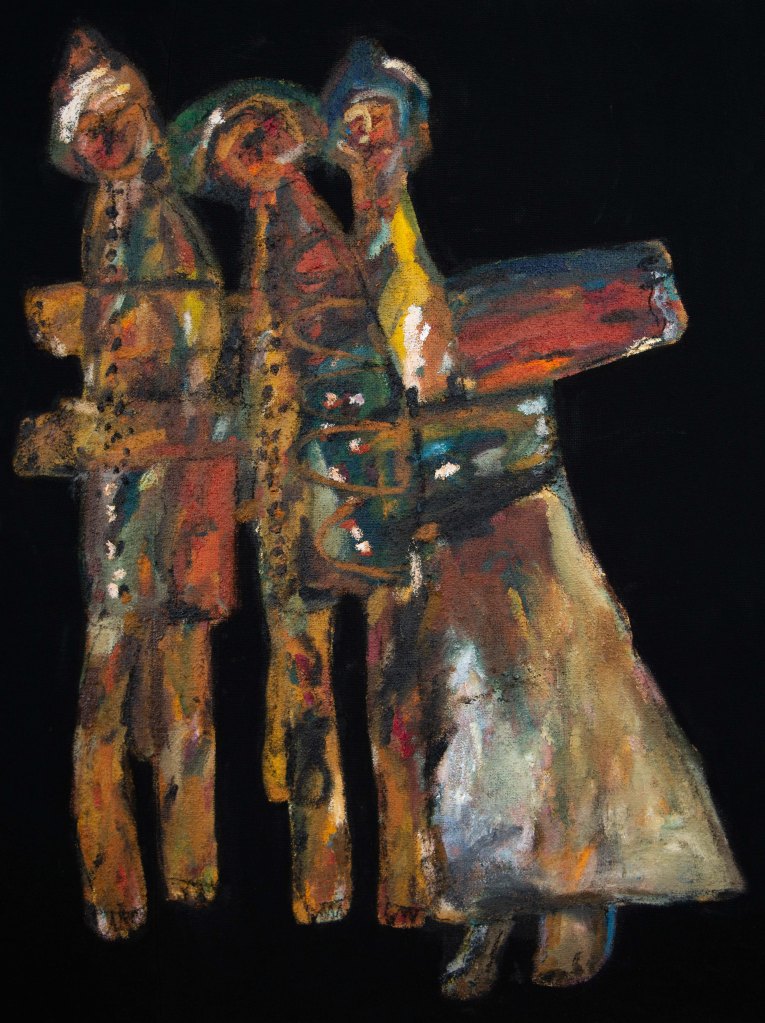
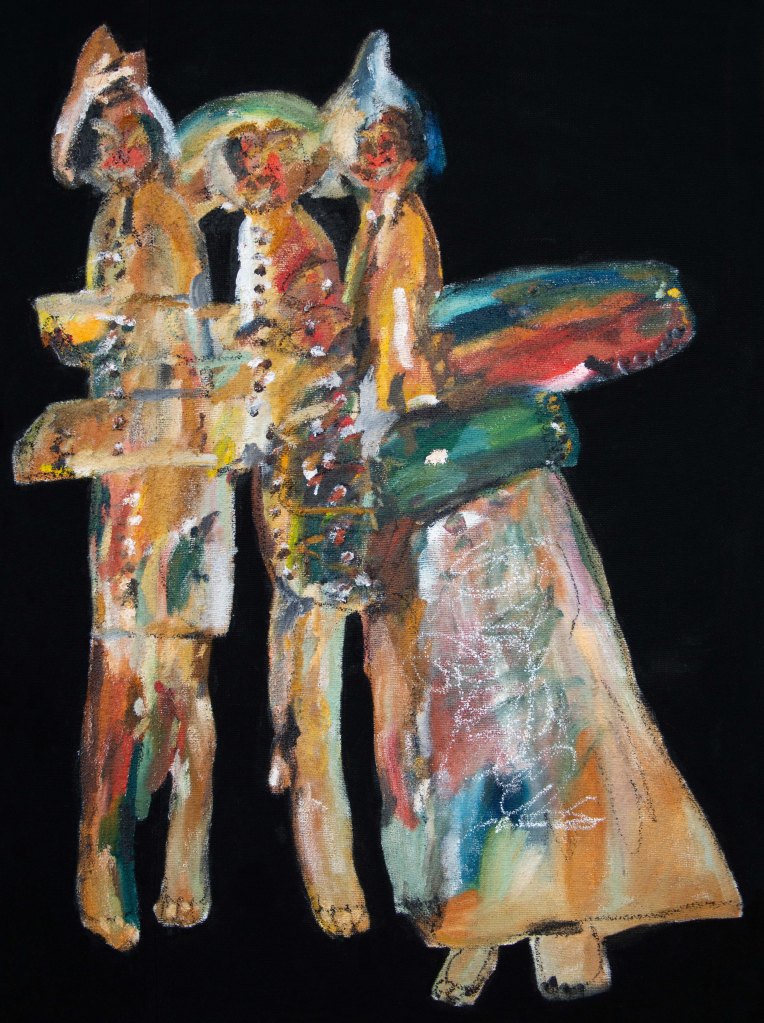
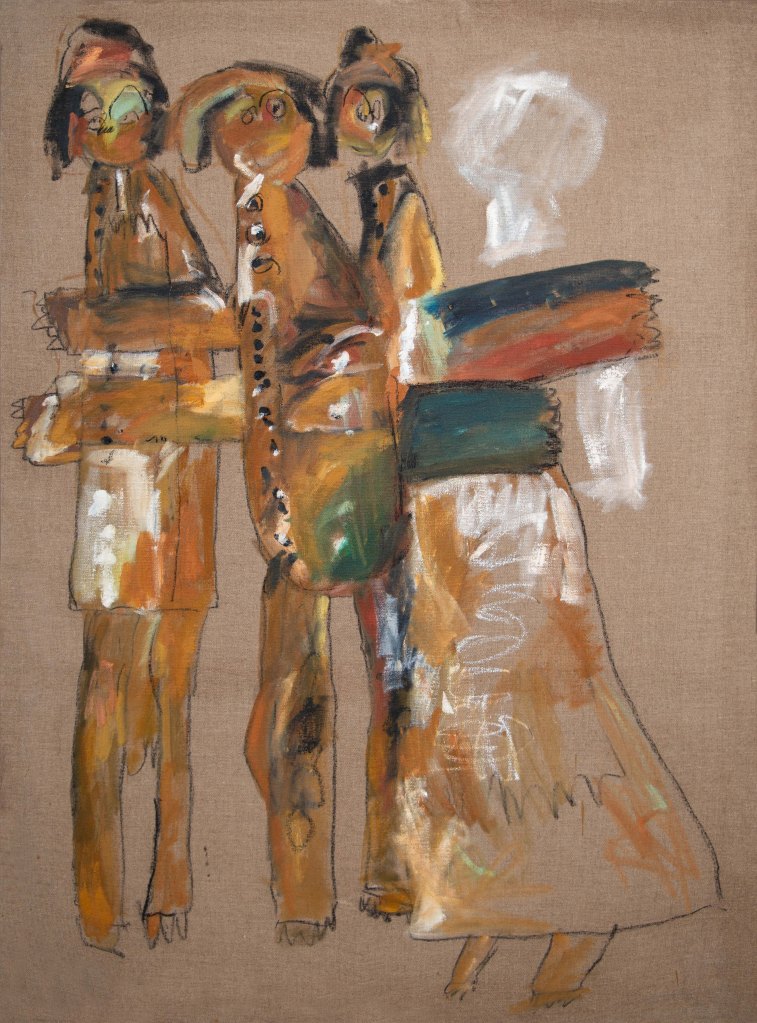
From this initial impulse sprung the following series, painted on fabric she wove herself, exhibited here under the name of Three graces, in reference to the figures depicted at the center of Botticelli’s Primavera (1482), which formed the inspiration for the original painting which she made in 1992, at the age of 4, the conception of which she still recalls:
“We had this small poster of Botticelli’s painting on a wall in our old house — I remember it hanging in the living room, above this large table with low legs where I used to draw. One night I decided to make a copy of it on my drawing pad, and when my father saw it he encouraged me to make more. I have found about five of them, almost all the same, lightly painted with watercolour.
A few days later, coming back from kindergarten, I recall my mother telling me that my father was wondering if I wanted come to his studio and make a larger version of those I had drawn on my sketching pad. As I went, I remember feeling this sense of pride in doing something which seemed important.
Upon entering I saw this enormous canvas he had prepared for me, much larger than myself, which he then placed on his very tall pattern-cutting table, lifting me up as well — which was when I saw all of the pens and paints he had laid out for me to use. He had made the canvas really hard by pasting layers of newspaper on the back and some sheets of drawing paper he had coated in some ochre paint on the front — it was so stiff I even sat on it when drawing.
I made an almost exact copy of those drawings he had liked, but with a few more details and decorations on the clothes hey are wearing, and once I had finished he covered the background in this very mat black, leaving nothing but the three graces, to which he added a fourth character on the right, for which I do not really know the reason.”
Nemeth’s interception of Botticelli’s masterpiece can be seen as somewhat antithetical to its prime purpose of showing a set of pleasantly rendered figures, in the sense that the ones she here proposes are far from conforming to the common aesthetic norms of beauty. As she describes them herself:
“The figures are probably the opposite of grace, one can be seen smoking a cigarette, and maybe a pipe as well, all of them screaming or smiling creepily, almost like monsters trying to scare or attack — but at the same time, these expressions could also could be seen as somewhat joyous, as if they were dancing towards some exciting destination.“
Nevertheless, of the reinterpretative tradition which Nemeth here comes to further through this series of paintings, one which includes the likes of Picasso, Schjerfbeck and Francis Bacon, she is perhaps the only one to possess a work made at the age of four even worth being given any attention to, which we are glad for, as without it the works here below would never have been.
Three graces
1992
Acrylic, crayon, marker on paper-pasted cotton canvas
120 x 90 x 3 cm.
Three graces – 1
2021
Oil on wool canvas
120 x 90 x 3 cm.
Three graces – 2
2021
Oil on wool canvas
120 x 90 x 3 cm.
Three graces – 3
2021
Oil on wool canvas
120 x 90 x 3 cm.
Three graces – 4
2021
Oil on linen canvas
120 x 90 x 3 cm.
 Lui Nemeth